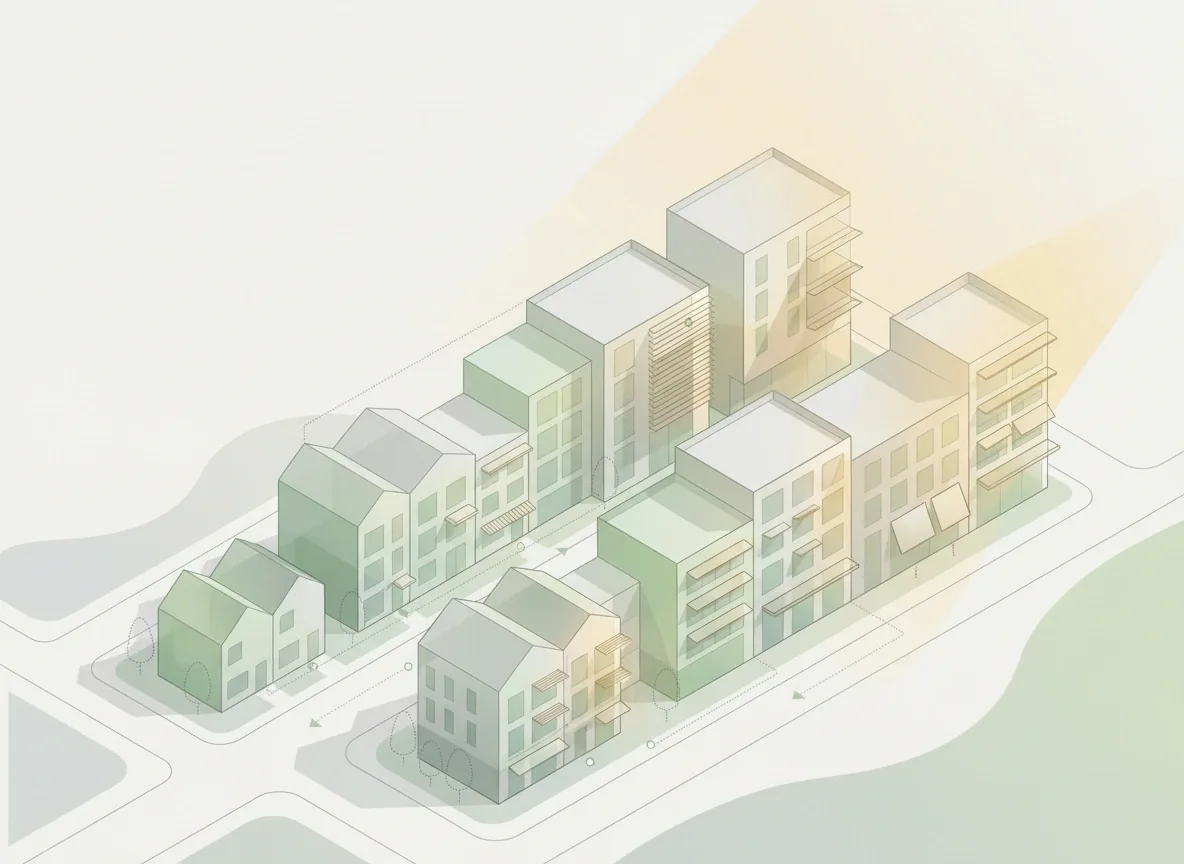
Monitoring a 10-Star Home in Woodforde, SA
What does a truly high-performance 10-star home look like in the real world? Hubble deployed AI-powered sensors in Woodforde, SA to turn design intent into measurable proof.
In the leafy suburb of Woodforde, South Australia (5072), Hubble set out to answer a simple but important question: what does a truly high-performance home look like in the real world?
This wasn't a simulation or a theoretical model. It was a 10-star home — designed to achieve the highest level of thermal performance — and we wanted to understand how it actually behaved once people were living in it.
What Is a 10-Star Home?
Under Australia's Nationwide House Energy Rating Scheme (NatHERS), a 10-star home represents the pinnacle of residential energy efficiency. The scale runs from 0 to 10, with higher stars indicating better thermal performance and lower heating and cooling energy requirements.
A 10-star rated dwelling needs virtually no mechanical heating or cooling to maintain comfortable indoor temperatures year-round. This is achieved through a combination of building orientation, high-performance insulation, advanced glazing, effective shading, and airtight construction.
But ratings alone don't tell the full story. Homes are dynamic systems — they respond to changing weather conditions, occupant behaviour, and material performance over time.
How We Monitored Performance
To capture this complexity, we deployed a dual-layer monitoring approach:
- Hubble proprietary sensors — tracking comfort, temperature distribution, and internal performance across zones
- ABB sensors and infrastructure — enhancing precision, reliability, and system-level insights
Key Findings from Real Data
Over the monitoring period, we collected real-time data on indoor temperature stability, external versus internal thermal response, energy usage patterns, and comfort conditions across different zones of the home. The results were compelling.
- Stable indoor comfort — despite fluctuations in outdoor temperatures, the home maintained a consistently comfortable indoor environment, confirming the effectiveness of well-designed building envelopes and insulation strategies
- Reduced reliance on active systems — the data showed minimal dependence on heating and cooling systems, with passive design principles doing the heavy lifting
- Design decisions that matter — clear correlations between specific design features and performance outcomes reinforce that good design is measurable, not just conceptual
Why Real-World Monitoring Matters
At Hubble, we believe the future of housing lies in bridging the gap between design intent and real-world performance. Monitoring projects like this allow us to validate high-performance claims with real data, improve our models and recommendations, and provide confidence to homeowners, builders, and policymakers.
It's not just about building better homes — it's about proving they work.
About Hubble's Technology
By combining Hubble's proprietary sensing technology with ABB's robust monitoring systems, we're setting a new benchmark for how residential performance can be measured and understood. This approach enables evidence-based decision making, continuous improvement in building design, and greater transparency in sustainability outcomes.
If you'd like to explore the findings in more detail or discuss how Hubble can support your projects, we're always keen to collaborate with partners who are serious about delivering better-performing homes.
"At Hubble, we believe in using AI for good — turning complex data into simple, actionable tools."
— Marco Salinas, CEO
Frequently Asked Questions
What is a 10-star home in Australia?
How is home performance measured?
Do passive homes eliminate heating and cooling?
What sensors are used to monitor buildings?
Get in touch
Want to explore how Hubble can help?
See how independent building performance data and AI can support your organisation's sustainability goals.
Request Data